OnlineOrNot updates from June through August 2026

Max Rozen / Published: October 01, 2026
It's been a while since I last updated you on what's new in OnlineOrNot.
For the most part, I've continued making it useful for software teams: there's now an MCP server, I've improved the terraform provider significantly, and there's a new TypeScript SDK. You can also (finally?) monitor DNS/TCP with it.
Table of contents
What's new
Features for developers
MCP server
You can connect your coding agent directly to OnlineOrNot with the new OnlineOrNot MCP server.
Once connected, your agent can use the same OnlineOrNot API you can. It can work with your uptime, browser, DNS, and TCP checks, heartbeat monitors, maintenance windows, status pages, incidents, webhooks, and more.
The MCP server supports Claude Code, Cursor, VS Code, Codex, Amp, Gemini CLI, OpenCode, Warp, Windsurf, Zed, and more. Cursor and VS Code also have one-click install buttons.
You can connect with OAuth in your browser, choose which OnlineOrNot accounts the agent can access, and review the permissions it is asking for before approving anything. You can also use an OnlineOrNot API token if you want to lock down what your agent can do at a more granular level
Read the MCP setup documentation to learn more.
TypeScript SDK
I started building @onlineornot/api after realising I was rewriting the same code over and over between the CLI and the dashboard.
In short, it's generated from the entire public OpenAPI schema, and I'm using it to build the OnlineOrNot product itself, meaning you can use new features through the API the day they're released.
Environment variables
Need to rotate an API token used by several uptime checks? Until now, you had to edit the header in every check that used it.
You can now save a secret once and use {{API_TOKEN}} in your uptime check headers. Replace the secret, and the next run of each check uses the new value.
Secrets are encrypted and can't be viewed again after they're saved. We also automatically scrub them from appearing in audit logs.
You can manage environment variables in the dashboard or through the API. The Terraform provider supports references in the headers map of onlineornot_uptime_check.
See the environment variables guide to set up your first check with environment variables.
Expanded terraform support
Similarly to the TypeScript SDK, terraform-provider-onlineornot now tracks the entire OpenAPI schema and is regenerated whenever the schema changes. Anything you can do through the API, you can do through terraform.
Additionally, you can now deploy playwright tests through the terraform provider, with browser check support for environment variables coming soon.
Features for Uptime Checks
DNS/TCP checks
OnlineOrNot now supports monitoring over both DNS and TCP.
DNS monitors support A, AAAA, CNAME, MX, NS, SOA, and TXT records over UDP or TCP. You can use OnlineOrNot's default resolvers, or point a monitor at a custom resolver if you need to check a specific DNS server.
You can monitor TCP ports directly, from multiple regions. Provide a hostname and port, choose IPv4 or IPv6, and OnlineOrNot will check whether a TCP connection can be established on your normal monitoring schedule.
You can learn more at the DNS and TCP documentation pages.
Features for Status Pages
Uptime calendar
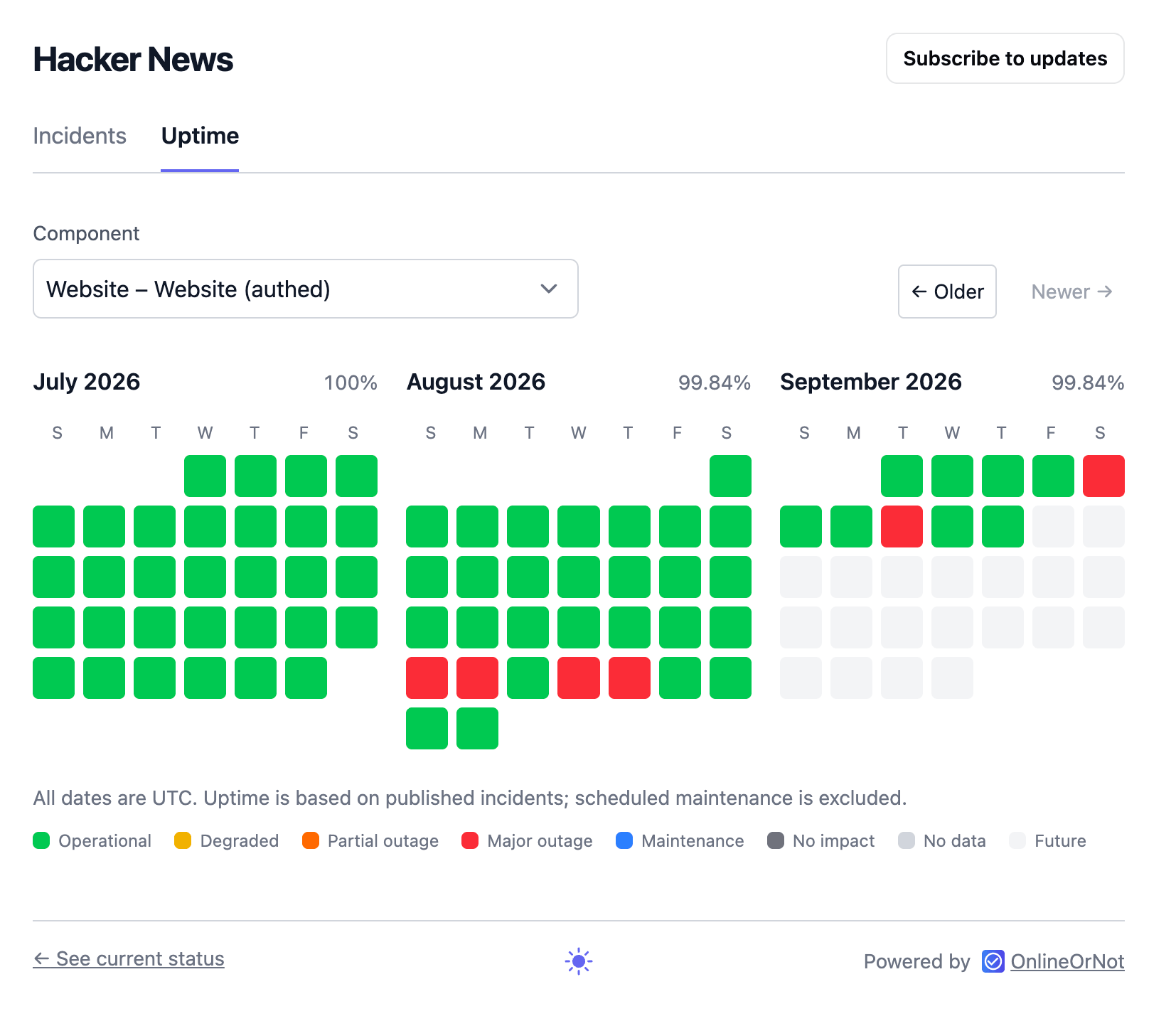
OnlineOrNot now supports uptime calendars for status pages, so you and your customers can browse each component's uptime history, three months at a time.
Each month shows its uptime percentage, with color-coded days to highlight incidents:
Features for alerts
Pushover alerting
OnlineOrNot now supports alerting through Pushover (push notifications to your phone, tablet, or desktop).
Check out the Pushover documentation to get started.
Microsoft Teams Workflows
You can now add the new Microsoft Teams Workflows-style webhooks as an alert target.